
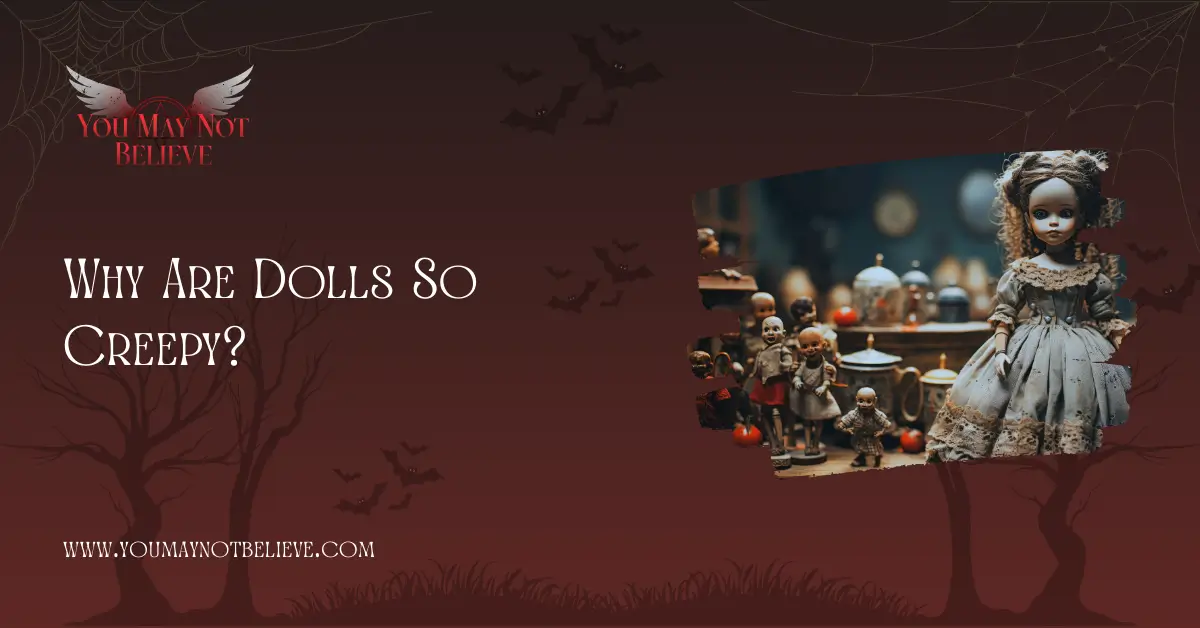
You know, reading about the scariest dolls like Annabelle, Chucky, Okiku, and Billy the Puppet, we are sure of one thing: dolls are not cute for some, but they are a hell of a lot scary. But why are dolls so creepy, and why do we have such eerie and ominous stories developed over the years? Dolls are supposed to be played with. Even the recent Labubu doll has been a figure of both business and controversy. Why?
Let us know and explore the creepy world of dolls and why they have gained so much ominous popularity in scaring people.
Table of Contents
The Strange Allure and Fear of Dolls
A Short History of Dolls in Culture and Mythology
Dolls have been around for more than 4,000 years, with ancient civilisations such as Egypt and Greece making figurines for religious rites and children’s play. Many societies used dolls as spiritual vehicles, such as voodoo dolls in West African traditions, kokeshi dolls in Japanese mythology, and poppets in European witchcraft.
By the Victorian era, porcelain dolls had become status symbols, with their lifelike glass eyes and human hair adding an unsettling authenticity. The twentieth century brought mass-produced plastic dolls, but their static looks and blank gaze remained unnerving. Dolls were converted from harmless toys to cultural symbols of fear through horror literature and film, cementing their place in the collective psyche.
Why Are Dolls So Creepy?
- The “Uncanny Valley” Effect: Masahiro Mori, a roboticist, used this term in 1970 to characterise our unease with devices that appear almost human yet fall short. Dolls inhabit this valley; they have human traits (eyes, faces, limbs), but lack warmth, movement, and life. Our brains perceive this discrepancy and respond with natural uneasiness.
- Emotional Triggers from Childhood Experiences: Many people have unpleasant memories of doll eyes that seemed to follow them, features that were different in shadows, or feelings of being watched. Childhood imagination combines reality and fiction, leaving strong imprints that linger throughout adulthood.
- How Pop Culture and Horror Movies Boost Fear: Films like Child’s Play (1988), Annabelle (2014), and M3GAN (2023) use our instinctive discomfort as a weapon. Repeated exposure to wicked dolls in the media strengthens the link between dolls and danger, resulting in cultural conditioning that makes even benign dolls appear hazardous.
The Psychology of Why Dolls Feel Alive
The Uncanny Valley Explained
The uncanny valley activates a survival mechanism. Throughout development, humans gained the ability to identify illness, death, and threats by recognising tiny irregularities in faces and behaviour. When dolls imitate human characteristics but lack true life signs, no breathing, microexpressions, or warmth, our brains generate a threat response.
Princeton University (2013) discovered that viewing eerie humanoid things activates brain areas involved in conflict and anxiety processing, specifically the amygdala. This neurological response is involuntary and difficult to control.
Are Dolls Reflections of Ourselves?
Dolls act as mirrors of human identity and emotion. Psychologists have observed that we project feelings onto dolls through anthropomorphism, which is the practice of attributing human features to non-human things. Children acquire empathy by caring for dolls, while adults experience nostalgia through them.
This projection becomes unsettling when dolls appear trapped between life and death. Their immobile expressions contradict our expectation of emotional reciprocity, resulting in cognitive dissonance. We see ourselves in them, yet they return nothing.
From Comfort to Creepy: When Innocence Turns Eerie.
Context alters perception. A doll in full daylight surrounded by toys appears innocent; under low lighting, stillness, or solitude, the doll becomes frightening. Environmental factors take advantage of our inherent sensitivity to darkness and quiet conditions in which predators have historically struck.
The stillness heightens the eerie atmosphere. While people make continual micro-movements, dolls remain totally immobile, causing surveillance anxiety, the sensation of being watched by something that should not be watching you.
Pop Culture’s Impact on Doll Horror
Famous Creepy Dolls from Movies and TV Shows
Remember This Freak?
- Chucky (Child’s Play, 1988): A serial killer’s spirit is trapped in a Good Guy doll, symbolising corrupted innocence and loss of control.
- Annabelle (The Conjuring, 2013): Based on a real Raggedy Ann doll, now housed in the Warren’s Occult Museum and possessed by an evil ghost.
- M3GAN (2023): An AI-powered companion doll turns violent, addressing issues of technology and artificial intelligence gone awry.
- Talky Tina (The Twilight Zone, 1963): One of television’s first malevolent dolls, she terrorises a stepfather who abandons his stepdaughter.
These figures play into universal worries, such as objects developing autonomy, innocence being corrupted, and humans losing control.
Why Horror Creators Use Dolls as Symbols of Fear?
Dolls reflect several strong horror themes:
- Corrupted innocence: Dolls represent youthful purity. When they turn wicked, it defies our expectations and heightens dread through contrast.
- Loss of control: Objects should remain inert. When dolls “come alive,” they challenge the natural order, instilling existential dread.
- Identity and Possession: Many doll horror stories feature souls trapped in things, evoking worries about what defines humanity and what occurs after death.
Can Dolls Move On Their Own?
No. They cannot. Unless they carry something sinister in them.
Paranormal Beliefs and Haunted Dolls
- Robert, the Doll: This 1906 doll, on display at Key West’s Fort East Martello Museum, is said to inflict accidents, disease, and misfortune. Visitors claim camera problems and unusual movements.
- Annabelle: The genuine Annabelle (unlike the film version) is a Raggedy Ann doll from 1970 that claims to have moved, written messages, and assaulted people. Ed and Lorraine Warren explored and included it in their museum.
- Island of Dolls, Mexico: Julian Santana Barrera hung thousands of mangled dolls from trees on Isla de las Muñecas, believing they would satisfy the ghost of a drowned girl.
The Science Behind Strange Movements.
Environmental reasons explain the majority of “paranormal” doll movements:
- Vibration: Micro-vibrations caused by traffic, footsteps, and structural settling cause objects to shift gradually, particularly lightweight dolls on smooth surfaces.
- Air currents: Heating systems, drafts, and air conditioning generate airflow, which can move lightweight things or provide the appearance of movement in hanging goods.
- Material degradation: Old dolls have internal mechanisms that can operate on their own owing to rust, dampness, or material breakdown.
- Optical Illusions: Peripheral vision is not as trustworthy as central vision. Movement observed in peripheral vision is often caused by eye movement rather than object movement.
Psychological Explanation: Why We See Movement That Isn’t There
Pareidolia is the tendency to detect significant patterns in random inputs. We are wired to recognise faces and movement as survival mechanisms, which results in false positives.
Confirmation bias: When we expect dolls to move, we automatically focus on any minor movement while ignoring stillness, reinforcing our views.
Memory reconstruction: Our brains do not record memories like video. We recreate them, often filling in gaps with expectations, making it unclear whether a doll’s position has altered.
Can dolls come to life and kill someone?
This is a ridiculous thought, and it seriously cannot happen. Let’s explore some stories on this.
Myths, Urban Legends, and Popular Culture Influence
There is no reported incidence of an inanimate doll autonomously causing harm to a person. However, mythology around the world includes animated objects:
In Jewish tradition, golems are clay sculptures that come to life through rituals. In Japanese folklore, tsukumogami are objects that attain sentience after 100 years. In Tibetan Buddhism, tulpas are thoughts that emerge as physical forms.
Modern urban legends combine old notions with contemporary concerns about technology, artificial intelligence, and the loss of human control.
Fiction vs. Reality: What Science Says
- Anthropomorphism: To survive, humans developed to give objects agency. Assuming that rustling bushes housed predators kept our ancestors alive, even if they were wrong 99 percent of the time.
- Pareidolia: Our facial recognition technologies are quite active, recognising faces in clouds, toast, and dolls. This gives the appearance that the dolls are “looking” at us with intent.
- Inanimate objects cannot spontaneously become conscious: No scientific evidence suggests that things develop awareness, intent, or the ability to move without external power. While AI-powered robots exist, they require programming, power sources, and mechanical systems, rather than supernatural possession.
Why Labubu Dolls Are Bad (and How They Went Viral)?
History of the Labubu Doll Craze
Labubu, created by Thai artist Kasing Lung in 2015, is part of the “The Monsters” toy collection. These designer vinyl toys became extremely popular in Asia between 2023 and 2024, particularly after K-pop sensation Lisa from BLACKPINK promoted them on Instagram.
The dolls are marketed in blind boxes (mystery packing), resulting in collector frenzy and secondary market speculation, with some rare variants fetching hundreds of dollars.
Controversies and Negative Reactions
Critics see Labubu dolls as scary because:
- Uncanny design elements include large, blank eyes, exaggerated teeth, and ambiguous expressions that belong in the uncanny valley.
- Distorted proportions: The combination of appealing traits (large eyes, petite body) and unpleasant details (sharp teeth, blank gaze) causes cognitive dissonance.
- Cultural appropriation concerns: Some designs combine elements from different cultures without providing context or respect.
- Consumer criticism: The blind box model and artificial scarcity are perceived as misleading marketing strategies aimed at young collectors.
Why Are Labubu Dolls So Unsettling?
Labubu subverts standard “kawaii” (cute) aesthetics by incorporating scary elements:
The dolls have contradictory features, expressionless faces, prominent fangs, and soulless eyes, creating a “lights are on but nobody’s home” effect.
This aesthetic—sometimes termed “cute-creepy” or “creepy-cute”—deliberately exploits the uncanny valley for artistic effect, making them both collectable and controversial.
Why We Cannot Look Away from Creepy Dolls?
The Thrill of Fear: Why People Seek Scary Experiences
Controlled fear offers various psychological advantages:
- Adrenaline rush: Fear causes the release of cortisol and adrenaline, resulting in a natural high while we are also conscious that we are safe.
- Curiosity satisfaction: The brain rewards knowledge collecting. Examining terrifying objects fulfils our desire to grasp prospective hazards.
- Safe exposure therapy: Facing anxieties in controlled conditions (e.g., horror films, creepy dolls) can help lessen anxiety in real life.
- Social bonding: Sharing scary experiences fosters connection through vulnerability and mutual support.
Researchers at the University of Pittsburgh discovered that persons who appreciate horror have higher sensation-seeking tendencies and better emotional management abilities.
why are dolls so creepy, and how do they justify the psychology?
Dolls embody several existential anxieties:
- Morality: The frozen looks and lifeless eyes of dolls serve as a reminder of death and the distinction between alive and dead.
- Loss of control: The concept of objects obtaining autonomy undermines our sense of control over our surroundings.
- Identity dissolution: Stories of souls trapped in dolls or humans becoming “doll-like” evoke concerns about losing our fundamental nature.
- A betrayal of innocence: Dolls symbolise childhood and trust. When they become threatening, they challenge our most fundamental safety beliefs.
- Surveillance: Their unblinking looks evoke modern fears about being watched, judged, and deprived of privacy.
Frequently Asked Questions About Creepy Dolls
Why do some people collect haunting dolls?
Collectors are drawn to paranormal artefacts for a variety of reasons, including a belief in the supernatural and a desire to investigate it, the thrill of owning “active” objects, historical interest in objects with documented stories, and investment potential, as haunted dolls can increase in value significantly. Some collectors consider themselves carers, keeping dolls safe from destruction.
Are scary dolls desirable to collectors?
Yes. Vintage dolls (especially porcelain dolls from 1850-1950), limited edition designer toys such as Labubu, dolls with provenance (documented history or celebrity ownership), and dolls highlighted in the media or with paranormal claims can all fetch high prices. Annabelle reproductions sell for hundreds of dollars, yet rare vintage dolls fetch thousands at auction.
How do you get over your phobia of dolls?
- Gradual exposure therapy — Begin with cartoon dolls, then pictures, and finally real dolls at a distance, gradually increasing proximity.
- Education — Understanding the psychology and science of fear lowers its potency.
- Cognitive behavioural therapy (CBT) — Collaborating with a therapist to confront unreasonable thinking and devise coping techniques.
- Recontextualization entails viewing dolls in positive settings (toy stores, joyful children) rather than in dismal environments.
- Control — Interacting with dolls on your terms (placing, covering, and manipulating them) restores a sense of agency.
For severe pediophobia (doll fear), professional therapy may be required.
Final thoughts on why are dolls so creepy
Dolls exist in a peculiar psychological space. They are both familiar and alien, innocent and disturbing, lifeless yet presumably sentient. Our fear of dolls is caused by evolutionary wiring (the eerie valley), cultural conditioning (horror media), and cognitive biases (paradolia, anthropomorphism).
Dolls continue to fascinate people because they reflect essential human issues such as identity, mortality, control, and the borders between life and death. Dolls, whether we collect them, fear them, or can’t stop watching horror films about them, serve as mirrors for our deepest concerns and interests.
The balance of nostalgia and creepiness ensures that dolls will continue to captivate the human imagination, reminding us that the most uncomfortable things are frequently those that seem almost, but not quite, like us.