
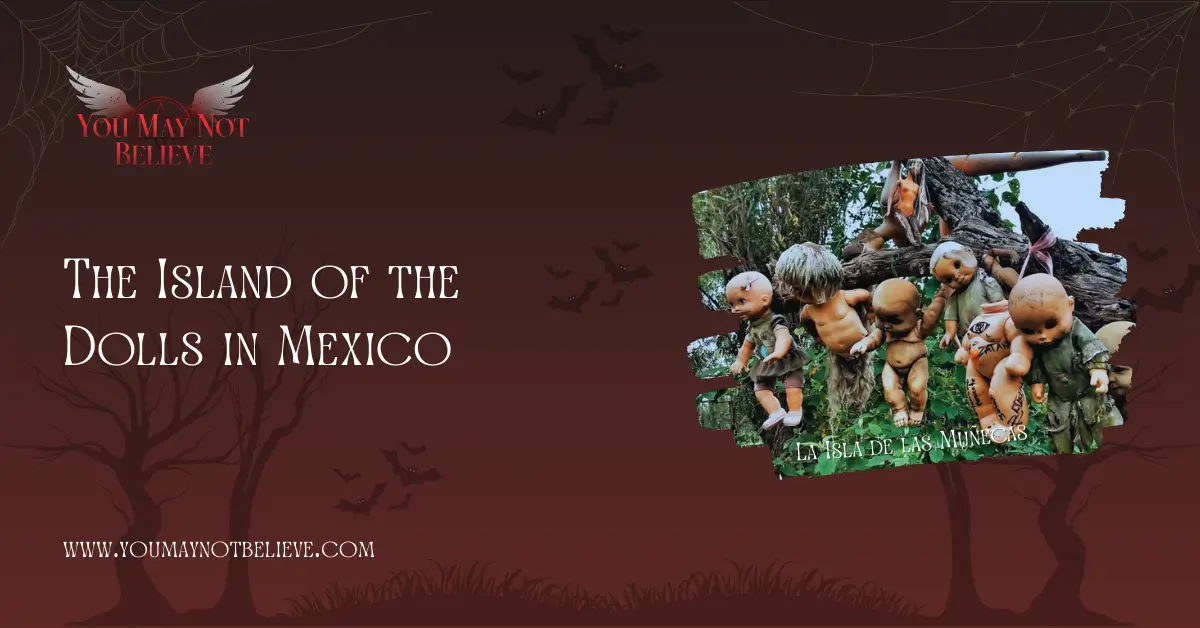
Imagine floating through hazy canals while more than 20,000 rotting dolls gaze down at you from every tree limb, their eyes hollow and tracking your boat.
This is the eerie chinampa in Xochimilco known as the Island of the Dolls in Mexico, where a man’s fatal fascination gave rise to what many consider to be the most unsettling tourist destination in the world.
Don Julián Santana turned his remote island into a shrine of eerie devotion by hanging hundreds of disfigured dolls to placate the soul of a drowning girl for more than 50 years.
Was he obsessed by delusions fuelled by grief, or was he haunted by real supernatural forces?
The terrifying true story of La Isla de las Muñecas, what to anticipate while visiting this frightening monument, useful advice for taking pictures of Mexico’s haunting dolls, and how to organise your trip into one of the country’s most unsettling secrets are all covered in this comprehensive book.
Table of Contents
What is The Island of the Dolls in Mexico?
La Isla de las Muñecas’s location and physical attributes
Tucked away in the historic canal network of Xochimilco, a UNESCO World Heritage Site in southern Mexico City, is the Island of the Dolls.
The major canal tour departure point, Embarcadero Cuemanco, is about an hour away by trajinera (colourful wooden boat) from this modest chinampa, a classic artificial island erected by the Aztecs for agriculture.
This island stands out from hundreds of others in Xochimilco’s 170-kilometre waterway network in an immediately alarming way: thousands upon thousands of dolls dangle from almost every surface.
Wire-wrapped torsos swing softly in the wind, eyeless heads look from bushes, and weathered plastic limbs hang from tree branches.
The dolls are in varying levels of decomposition, ranging from newborn dolls that are largely intact to dolls that have had their bodies entirely dismembered. The majority of them have been taken over by moss, mould, and insects, creating a scene that is somewhere between an outdoor museum of deterioration and a nightmare from a playground.
The island itself is still quite small. Most of it is visible to visitors from their boats. Photographs are unable to convey the overpowering sensory sensation created by the sheer number of dolls covering trees, fences, and buildings.
The dry season, which runs from November to April, is the ideal time to visit the Island of the Dolls in Mexico because of the reduced humidity, which results in fewer insects and better photo conditions.
How a Haunted Attraction Was Created on the Island of the Dolls?
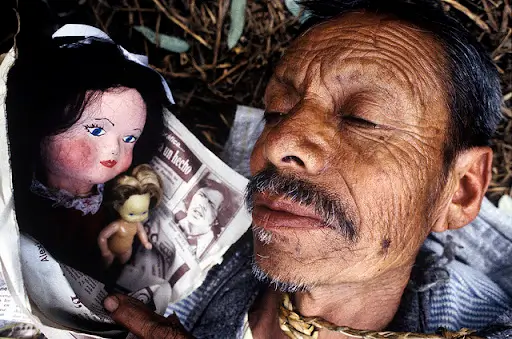
The Island of the Dolls, Mexico, was only known to local canal workers and the occasional inquisitive boater, and it served as Don Julián Santana’s personal haven for decades.
Julián was able to dwell in relative seclusion while building his increasingly unsettling doll collection since the chinampa had been abandoned for agricultural usage.
The island’s reputation changed drastically after his unexplained death in 2001 (he was found drowned in the same canal where he said the girl had died 50 years previously).
Initially curious about the quirky hermit’s fascination, local trajinera operators started incorporating it into their tours.
After the haunted dolls Mexico site gained popularity, La Isla de las Muñecas became one of Xochimilco’s most sought-after tourism spots in a few years.
Thousands of tourists visit the island every year in search of paranormal experiences, photography opportunities, or just to observe the physical expression of one man’s supernatural belief. Today, the island serves as both a memorial and a tourist destination.
The Island of the Dolls in Mexico: A Tragic True Story
The Drowned Girl and Don Julián Santana
Don Julián Santana Barrera left his wife and kids in the 1950s to live as a recluse on a secluded Xochimilco chinampa, which is where the birth tale of the Island of the Dolls in Mexico starts.
His story, the only one that survives, states that Julián either saw or found a young girl who had drowned in the canals close to his island. According to some accounts, he made an unsuccessful attempt to save her. Some claim he just discovered her body floating in the murky water.
Whatever the circumstances were, Julián claimed to have been plagued by remorse and the belief that the child’s spirit was still stuck close to the drowning scene, haunted by the child’s death.
Julián found a doll floating in the same canal shortly after the incident. It might have been the girl’s toy or just trash carried by the current.
He took the doll and hung it on a tree as an offering to calm the girl’s restless soul, taking this as a sign from the supernatural. His life would be overtaken by a five-decade obsession that began with this one act of commemoration.
Curiously, Julián’s claim is not supported by any drowning records or missing person reports from the 1950s, which has led some to wonder if the girl even lived.
She might have symbolised something more profound in Julián’s mental landscape, like loneliness, remorse, or loss, showing up as ritualistic self-defence.
Escalation: Doll Obsession and Gifts from Ghosts
What started off as a solitary memorial doll quickly turned into a project that consumed everything.
According to Don Julián, the girl’s spirit was not satisfied with the first doll. He could still hear her murmurs in the darkness, pleading for more offerings, safety, and company.
He started actively looking for dolls, scrounging through donation piles, canals, and rubbish heaps throughout Xochimilco. He would exchange damaged toys for his homegrown flowers and veggies, valuing quantity over quality.
The dolls that emerged on Julián’s island seemingly out of nowhere are the most disturbing part of his story.
Many, he claimed, came as “gifts from the spirit world,” dolls he’d found in his boat before sunrise, or branches he’d passed the previous evening.
Julián saw these arrivals as spiritual communication, evidence that spirits were actively involved in the construction of his shrine, whether they were brought by curious visitors, empathetic neighbours, or canal currents.
This obsession produced the estimated 20,000+ dolls that currently adorn the island, each of which is hung with ceremonial care, over a period of 50 years.
According to reports, Julián cleaned the dolls regularly, spoke to them, and arranged them in ways he thought would appeal to the girl’s soul.
According to friends and relatives, he gradually changed from an eccentric recluse to someone who was totally engrossed in conversation with forces that only he could perceive, spending every waking moment caring for his expanding collection of plastic guardians.
Mexico’s Haunted Dolls: Paranormal Reports and Observations
Island of the Dolls’ Ghosts
Travellers visiting Mexico’s Island of the Dolls frequently describe extremely frightening encounters that are difficult to describe.
The most popular allegation is that you can hear a young girl singing or laughing across the lake, especially at dawn or sunset when the island is covered in mist.
Despite the absence of children, the island itself seems to be the source of these disembodied chuckles. Many tourists claim that the dolls’ eyes trail their boats as they go by, observing movement with a sense of awareness that should not be there in dead plastic.
Dolls are described as physically moving in more dramatic stories, such as heads twisting, arms changing positions, or whole bodies swaying in the absence of wind.
Citing personal accounts of shadows shifting between the hanging figures or murmurs emanating from the doll-covered branches, several trajinera operators forbid visitors after dark.
The sightings of Don Julián himself that have been reported are perhaps the most terrifying. Witnesses say they saw an old man dressed like a peasant strolling around the dolls, caring for them just like he did in real life, only to disappear when someone called out to him.
Others describe sensations of being watched that worsen around dolls with intact eyes, or abrupt dips in temperature when boats approach specific areas of the island.
These encounters have solidified the island’s status as one of Mexico’s most frequently haunted places, whether they are the result of real paranormal activity or the power of suggestion enhanced by genuinely eerie circumstances.
Xochimilco Dolls Island Paranormal Investigations
Media outlets and paranormal investigative teams have taken a keen interest in the Island of the Dolls in Mexico in an effort to record its legendary status.
Investigators Zak Bagans and his team reported electronic voice phenomena (EVP) recordings that purportedly captured a young girl’s voice answering questions during a complete episode of “Ghost Adventures” on the Travel Channel.
Infrared cameras seemed to capture dark figures moving through the trees, and their technology detected unusual electromagnetic field spikes close to particular dolls.
The island has been inundated with nightly investigations by YouTube paranormal investigators, many of whom are recording identical experiences. Common reports include spirit boxes responding like children, dolls discovered in various places from hours earlier, and camera issues close to purportedly “active” dolls.
During video playback, one investigator recorded a doll that seemed to blink; however, detractors claim this illusion is caused by compression artefacts.
A sort of feedback cycle has been established by the island’s increasing notoriety in paranormal circles. As more people come for their own experiences as a result of each investigation, the notoriety of the haunted place grows.
In a setting so psychologically predisposed to supernatural interpretation, objective evaluation is challenging because documentation ranges from convincing audio abnormalities to easily refutable camera manipulations.
Local Beliefs against Scientific Explanations
Sceptics provide realistic, non-supernatural explanations for the Island of the Dolls in Mexico.
There are hundreds of dangling dolls, and the wind rustling through them naturally produces creaking, swaying, and sounds that the mind may interpret as whispers or movement. If you are scared or have a fear of dolls, you might want to think again about visiting this site.
The humidity in the canal speeds up decomposition and produces mould patterns that gradually resemble shifting facial expressions.
Static dolls appear to follow viewers due to parallax effects caused by boat movement.
Pareidolia, the propensity to see significant patterns in seemingly random stimuli, particularly faces, is made more likely for visitors by the island’s seclusion and spooky atmosphere.
However, these logical justifications run counter to ingrained regional prejudices that existed before Julián took over.
Indigenous populations in Xochimilco have long held water spirits in high regard, believing that the ancient canals are home to both vengeful and protective spirits.
According to ancient beliefs, the spirits of drowning victims stay connected to their death locations unless they are appropriately honoured. These waters were ruled by the Aztec god Téléloc.
According to this cultural viewpoint, Julián’s behaviour is consistent with long-standing customs of presenting presents to placate agitated spirits.
The existence of the girl’s ghost is not questioned by many locals. They see the Island of the Dolls in Mexico as a prosperous spirit temple that merits reverence rather than critical examination, and they embrace it as an undeniable fact.
Each group interprets the same dolls via completely different frameworks, resulting in distinct narratives about the island that hardly ever overlap due to the cultural barrier between indigenous spirituality and Western scientific rationalism.
The Island of the Dolls Tour: What to Expect?
Long before you arrive, your trajinera operator will tell you about Don Julián’s mythology as you navigate increasingly remote and tight canals on the Island of the Dolls in Mexico.
As you leave the crowded tourist areas, the atmosphere clearly changes. Your approach is indicated by fewer boats, more dense vegetation, and a quiet that makes the soft lap of the water immediately audible.
The island gradually makes its announcement: a few dolls hanging from far-off trees at first, then more, until hundreds of rotting plastic faces are glaring at you from all sides.
Although some operators offer longer stays at an extra price (usually 100-200 pesos), most visits last 20-30 minutes.
To protect the dolls and deter theft, the island’s guardians restrict direct access, so you’ll usually stay in your boat instead of getting off.
The most unsettling exhibits, such as groups of severed doll heads, bodies with sticks in place of limbs, and faces covered in moss that gives the appearance of expression, are all within arm’s reach as you slowly float around the island’s perimeter from the sea.
There is a tremendous quiet. Just the sound of birdsong and wind through plastic limbs, no music, little discussion.
Due to the hundreds of eyes—both complete and empty—facing the canal, many tourists report feeling watched.
Photography is both allowed and encouraged. Beautiful, eerie photos that are impossible to take anywhere else are produced by the bizarre setting.
Even during the middle of the day, the deep tree canopy makes for difficult lighting, so bring a camera with good low-light capabilities for the best results. A polarising filter aids in lowering water glare.
While some trajinera operators talk about their own paranormal encounters, others remain silent with scepticism.
In keeping with Don Julián’s custom, guests frequently leave brand-new dolls as offerings before leaving. The proper locations for these contributions will be indicated by your guide.
Haunted Dolls: Mexico’s Cultural Significance
The Aztec Origins and Spiritual Beliefs of Xochimilco
It is impossible to comprehend The Island of the Dolls, Mexico, without acknowledging the deep spiritual and historical significance of Xochimilco.
The Aztec chinampa agricultural system, a clever method of building artificial islands out of lake vegetation and mud that once supplied food for the entire Tenochtitlan empire, is preserved in this UNESCO World Heritage Site.
Families have been cultivating these “floating gardens” using pre-Hispanic techniques for generations, making them living archaeological gems.
In this way, Don Julián’s behaviour reflects more profound cultural customs around offerings, ghosts, and death. Mexico celebrates Día de Muertos (Day of the Dead) by making elaborate altars with toys, dolls, and other items to greet returning spirits.
The custom of leaving offerings to placate possibly harmful ghosts has its roots in centuries of indigenous belief systems that saw the line separating the living from the dead as permeable and in need of ongoing upkeep.
Aztec mythology placed special emphasis on water spirits. To guarantee agricultural prosperity and avoid drowning deaths, Tláloc, the rain and water deity, required frequent sacrifices and gifts.
For many residents of Xochimilco, the Island of the Dolls, Mexico, represents an instinctive return to traditional methods of appeasing spirits rather than one man’s insanity.
Similar to how sacred artefacts in temples gather power through age and repeated ritual use, the dolls function as contemporary gifts in an ancient tradition, and their worn appearance over time actually increases rather than diminishes their spiritual strength.
Consider studying about [Día de Muertos celebrations in Oaxaca] or touring the neighbouring [Teotihuacan pyramids] if you want to understand more about Mexico’s spiritual customs.
Pop Culture and Media’s Island of the Dolls
Beyond its actual location, the Island of the Dolls in Mexico has become a worldwide cultural phenomenon, especially in the realm of horror and paranormal entertainment.
Millions of viewers worldwide were introduced to the island by Netflix’s numerous travel and supernatural documentaries.
The emphasis on the ghostly elements in these shows, which occasionally exaggerate or fictionalise events for dramatic effect, has caused conflict with Don Julián’s family, who would prefer a more respectful portrayal.
With hashtags like #IslandOfTheDolls garnering hundreds of millions of views, TikTok challenges and Instagram photo chances have attracted waves of younger visitors looking for viral content.
Although Xochimilco’s trajinera operators profit financially from this social media exposure, worries about overtourism and cultural insensitivity are also raised.
The island has served as an inspiration for doll-based supernatural stories in a number of horror films, however this is rarely done with explicit consent or realistic portrayal.
The island is frequently included in lists of “most haunted places,” placing among sites like Japan’s Aokigahara Forest and Italy’s Poveglia Island in carefully compiled lists of unsettling spots.
The site’s significance has become more complex as a result of its pop culture prominence, which may preserve Don Julián’s legacy while also turning it into entertainment that obscures the sincere sorrow and spiritual conviction that led to the construction of the shrine.
The Island of the Dolls of Mexico, is a great addition to [Guanajuato’s mummy museum] and [Mexico City’s haunted historic centre tours] for tourists who are organising a more comprehensive haunted Mexico itinerary.
The Dolls’ Contemporary Island: Conservation and Travel
Family Takes Care of the Shrine After Don Julián
Stewardship of the Island of the Dolls, was transferred to Don Julián Santana’s family, especially his nephew Anastasio Velázquez and other family members, after he died in 2001 (he was discovered drowned in the same canal where he claimed to have seen the girl die decades previously).
They changed from being disbelieving witnesses to Julián’s fixation to devoted stewards of his legacy.
Family members frequently travel to the island to handle maintenance, which includes rehanging dolls that have been damaged by storms, removing vegetation that could reclaim the buildings, and organising newly donated dolls from tourists into suitable exhibition areas.
The family has maintained the island’s fundamental character while implementing selective modernisation.
In addition to selling refreshments to arriving boats, they have a tiny shelter where visitors can keep a guest book in which they can document their adventures and ghostly sightings.
Importantly, they verify which dolls are “spirit gifts” as opposed to donations from tourists, asserting that they can spot dolls that don’t arrive in person by looking at their positioning and state.
For paranormal investigators who want to examine “original” dolls from Don Julián’s time, this authentication procedure has become crucial.
Storm damage is a persistent problem. Dolls and trees that have sustained displays for decades are frequently destroyed by hurricanes and other extreme events.
Given that the dolls’ degeneration contributes to the site’s eerie mood, the family must make the tough choice of whether to seek historical accuracy in repairs or to let the dolls continue to deteriorate naturally.
In order to preserve the island’s unadulterated, raw, eerie quality, they have rejected commercial pressure to sanitise or theme-park it.
Additionally, the family defends Don Julián’s memory from doubters who write him off as mentally ill, claiming he was a true spiritual seeker reacting to real supernatural encounters.
Xochimilco Dolls Island’s Ethical Tourism
The Island of the Dolls in Mexico presents visitors with moral dilemmas because it is a complicated junction of a commercial tourist destination, a family memorial, and a place of worship.
The basic guideline is still unbreakable: never take any dolls or doll parts off the island. Locals believe that stealing from the shrine invites the drowned girl’s curse, ongoing bad luck, or even drowning death, in addition to the cultural disrespect.
Sceptics write this off as superstition, yet regardless of one’s own beliefs, it represents sincere spiritual sentiments that should be respected.
Supporting local trajinera families directly benefits Xochimilco’s community rather than corporate travel operators. Families who have been using these canals for generations benefit from the tourism industry’s revenue when boats are rented at Cuemanco.
Steer clear of third-party booking websites that charge high commissions. At the embarcadero, bargain directly with boat operators instead. If bringing a doll as a sacrifice, pick one that is both humble and weatherproof. More important than the gift’s monetary value is the gesture.
Some guests leave dolls with handwritten comments elaborating on their meaning, fostering discussion on the shrine’s mission. Compared to cloth or plush dolls, plastic or resin dolls are more weatherproof, which helps maintain the island’s integrity over time.
Respect for behaviour is equally important. Don’t make fun of the dolls, Don Julián’s beliefs, or guests who claim to have had paranormal experiences. Both sceptics and paranormal enthusiasts are drawn to the island. Both points of view merit consideration without mockery.
Avoid the urge to take “creepy” pictures that could go viral but would be disrespectful to the spiritual aspect of the location. While purposeful sensationalization or desecration is acceptable, photography is not.
This includes scaling buildings, moving dolls about to get better pictures, or producing material that ignores the island’s cultural and spiritual value in favour of presenting it as entertainment.
Lastly, tourists should reduce their impact on the environment. Avoid disturbing wildlife, don’t litter in the canals, and remember that Xochimilco is still a functioning agricultural area that supports families in addition to its tourism appeal.
Traditional wooden boats are called trajineras. Steer clear of standing or making abrupt movements that could harm them or result in mishaps.
Recognising the Island of the Dolls as a haunting attraction, memorial shrine, and someone’s legacy all at once, and approaching it with curiosity and cultural humility, is what it means to connect with it ethically.
Common FAQs About Mexico’s Island of the Dolls
Where is Mexico’s Island of the Dolls?
The Xochimilco canal system in southern Mexico City is home to the Island of the Dolls Mexico (La Isla de las Muñecas), which is about 28 km from the city centre.
In particular, it is located in one of the isolated canals that may be reached from Embarcadero Cuemanco by trajinera boat.
The island, which is a chinampa (an artificial island made using traditional Aztec farming methods), may be reached by boat from the main departure ports in about an hour via twisting rivers.
The precise GPS coordinates are roughly 19.2897° N, 99.0951° W, since entry is only possible by guided boat through the labyrinthine canal system, these are of little use.
Is it safe to visit La Isla de las Muñecas?
Yes, with trustworthy trajinera operators, it is physically safe to visit the Island of the Dolls in Mexico during the day.
There aren’t any deadly animals, shaky buildings, or physical dangers that aren’t found in any outside canal setting.
The operators are skilled navigators, and the boats are stable.
Psychological factors are the main safety concerns. Sensitive guests, especially those under ten, may be disturbed by the truly eerie atmosphere.
Visit official embarcaderos during daylight hours (ideally between 10 AM and 3 PM), use licensed boat operators (look for displayed rate cards and operator identification), and heed your guide’s advice to stay seated and avoid touching specific spots.
Rather than genuine physical threats, the “danger” mostly consists of cultural disdain (removing dolls) or difficulties navigating at night.
Standard travel safety measures are applicable: keep valuables safe in the boat, avoid displaying pricey equipment carelessly, and, if at all possible, go in groups.
Why does the Island of the Dolls have dolls?
To placate what he thought was the restless spirit of a young girl who drowned in the adjacent canal in the 1950s, Don Julián Santana Barrera spent more than 50 years gathering and hanging the dolls.
Soon after the girl died, Julián found a doll floating in the ocean. Interpreting it as a sign from the supernatural, he started making dolls as offerings to safeguard the island and pay respect to the girl’s spirit.
Due to his fascination, an estimated 20,000+ dolls were placed on almost every surface, turning a private monument into a well-known haunted attraction.
Julián thought the dolls were protectors or vessels that held spirits that spoke to him and watched over the island.
He would speak to them, arrange them in particular ways, and even assert that they were presents from the spirit realm that came overnight or moved on their own.
His family has been caring for the collection since he died in 2001, and guests have continued the custom by adding their own doll contributions.
Is it possible to visit Haunted Dolls Mexico at night?
Although it is physically feasible, most trajinera operators will not travel to the Island of the Dolls in Mexico after dark, and nighttime excursions are strongly discouraged.
Practical issues include hazardous passage over small canals without sufficient lighting, significantly elevated mosquito populations, and restricted emergency response options in the event of issues.
Collisions are a serious risk because the canals lack lighting infrastructure and trajineras rely on handheld flashlights or cell phone lights.
Furthermore, the dolls’ psychological effect is significantly amplified in the dark. For people who are prone to anxiety, what is disturbing during the day might turn potentially horrific at night.
The few operators who accept evening trips want larger groups for safety, usually at least 6–8 persons, and charge premium rates (about 1,500–2,500 pesos, 2-3 times daytime pricing).
Additionally, nocturnal visits are considered culturally unacceptable without adequate spiritual preparation or authorisation from the island’s caretakers, as local belief says that supernatural activity peaks after sunset.
To see the island during the “golden hour” and return before complete darkness, plan a late afternoon departure (3–4 PM) if you are adamant on visiting at sunset.
Are the spirits of the Island of the Dolls real?
There is no conclusive solution to this question. Individual viewpoints on paranormal phenomena determine whether or not one believes in the ghosts of the Island of the Dolls in Mexico.
Dolls moving on their own, apparitions of Don Julián, disembodied children’s voices, and intense sensations of being touched or watched are just a few of the otherworldly encounters that thousands of tourists claim.
EVP recordings and unexpected temperature variations are among the audio and electromagnetic anomalies that paranormal investigators have documented as proof of spiritual activity.
Psychological priming, environmental elements (wind-moving dolls, humidity producing sounds, shadows and lights generating illusions), and suggestion, according to sceptics, produce these experiences without the need for supernatural explanation.
One should never undervalue the influence of expectation in a purposefully eerie setting.
Viewing the island through millennia of water spirit beliefs, local populations entrenched in indigenous spiritual traditions frequently accept the girl’s ghost as an evident reality requiring no proof.
There isn’t any solid scientific evidence that would meet strict academic requirements, but that doesn’t mean there isn’t any evidence.
Whether or not the ghosts are “real” is ultimately less important than the site’s true spiritual value and the real experiences that guests frequently report.
Whether or not supernatural forces are objectively present, the Island of the Dolls in Mexico serves as a legitimate place of worship.
When is the ideal time of year to visit Mexico’s Island of the Dolls?
The dry season, which runs from November to April, is the best time to visit the Island of the Dolls in Mexico, especially from December to February.
These months have very little rainfall, pleasant temperatures (15–25°C/59–77°F), and much fewer mosquitoes.
Additionally, the weather is more stable, and the water is clearer in the canals, which improves boat travel and photographic chances.
Steer clear of the rainy season (June to September), when afternoon thunderstorms are frequent, humidity levels can get unbearable, and swarms of mosquitoes can make the trip quite awful, even with repellent.
Rain makes the island even more eerie, but the inconvenience of the practical situation typically overcomes the atmospheric advantages.
The day of the week is also important. On weekends, particularly on Sundays, large groups of local families congregate in Xochimilco for celebrations and picnics, which causes high canal traffic and longer wait times at Cuemanco.
The greatest availability, affordable rates, and clear canals are found on Tuesday through Thursday mornings.
Particular attention: travelling close to Día de Muertos (late October to early November) offers a cultural context as Xochimilco celebrates with ornate customs, but it also attracts the greatest number of tourists and premium prices.
Is it possible for kids to travel to Mexico’s Island of the Dolls?
Yes, in theory, but parents should carefully take their child’s age and temperament into account.
Sensitive kids may experience stress from the truly unsettling scenes in The Island of the Dolls, Mexico.
Children under ten years old may experience anxiety or nightmares due to decaying dolls, missing limbs, empty eye sockets, and the general decaying mood.
Although there isn’t any overt violence or gore, the psychological effect is similar to that of a horror film.
Many families indicate that when guides tell Don Julián’s story of the drowning girl, children initially find it interesting but later feel uneasy or afraid.
While elementary-aged children often find it too frightening, teenagers interested in paranormal subjects or photography frequently find the experience enjoyable.
Children are best known by their parents. Consider other Xochimilco excursions that concentrate on the lovely canals, floating gardens, and cultural elements without going to the Island of the Dolls in Mexico if your youngster is easily frightened, sensitive to eerie imagery, or anxious about death or ghosts.
If you do bring kids, let them know in advance what to expect and tell them that this is a memorial shrine that should be respected rather than mocked.
If youngsters show signs of true anguish, don’t make them stay. Many operators will reduce trips or, upon request, completely avoid the island.
Concluding Remarks on the Mystery of the Island of the Dolls, Mexico
One of the most eerie intersections of sorrow, obsession, and spiritual belief in the world is the Island of the Dolls in Mexico.
The physical outcome of Don Julián’s five-decade endeavour is unquestionably powerful, regardless of whether you view it as a true supernatural answer or a profound psychological manifestation.
Thousands of decaying dolls stand as silent witnesses to one man’s steadfast faith in powers beyond human comprehension at this shrine, which turns childhood innocence into memento mori.
The island provides visitors with an experience that is difficult to classify: it is a tourist destination, an active shrine, an outdoor museum, and a purportedly haunted area where the lines between truth and belief are purposefully and unsettlingly blurred.
Regardless of your personal ideas regarding the paranormal, if you decide to visit La Isla de las Muñecas, do it with respect for the cultural and spiritual traditions that produced it.
Encourage the trajinera families in the area who are preserving Xochimilco’s culture. Respect Don Julián’s memory by doing so appropriately. Understand that what you are seeing is not just a photo opportunity, but rather a genuine spiritual exercise.
Your comfort and possibly your scepticism will be tested by the Island of the Dolls Mexico. Accept that discomfort as a necessary component of coming across something truly unexplainable in our world that is being more and more explained.
Are you prepared to visit Mexico’s Island of the Dolls? Make your direct reservation for your trajinera tour at Embarcadero Cuemanco. Don’t forget to haggle over costs in advance and go during the day.
Bring an open mind, a camera, and insect repellent. Long after your boat leaves those gloomy waterways, the experience will remain with you, whether you leave believing in ghosts or just admiring a remarkable act of dedication.
Explore our linked articles on [Japan’s Okiku doll], whose hair inexplicably keeps growing decades after the girl’s death, and [Annabelle], the Raggedy Ann doll that frightened paranormal investigators Ed and Lorraine Warren, if you’re interested in haunting dolls throughout the world.
Each reflects various cultural perspectives on items that we either fear or think could contain more than plastic and stuffing.
Our guides to [other haunted spots in Mexico City], such as [La Llorona sighting locations] and [the most haunted haciendas near Mexico City], might also be of interest to you.
Have you been to Mexico’s Island of the Dolls? Tell us about your experience in the comments section below, particularly if you came across anything inexplicable while exploring the eerie canals of Xochimilco.