
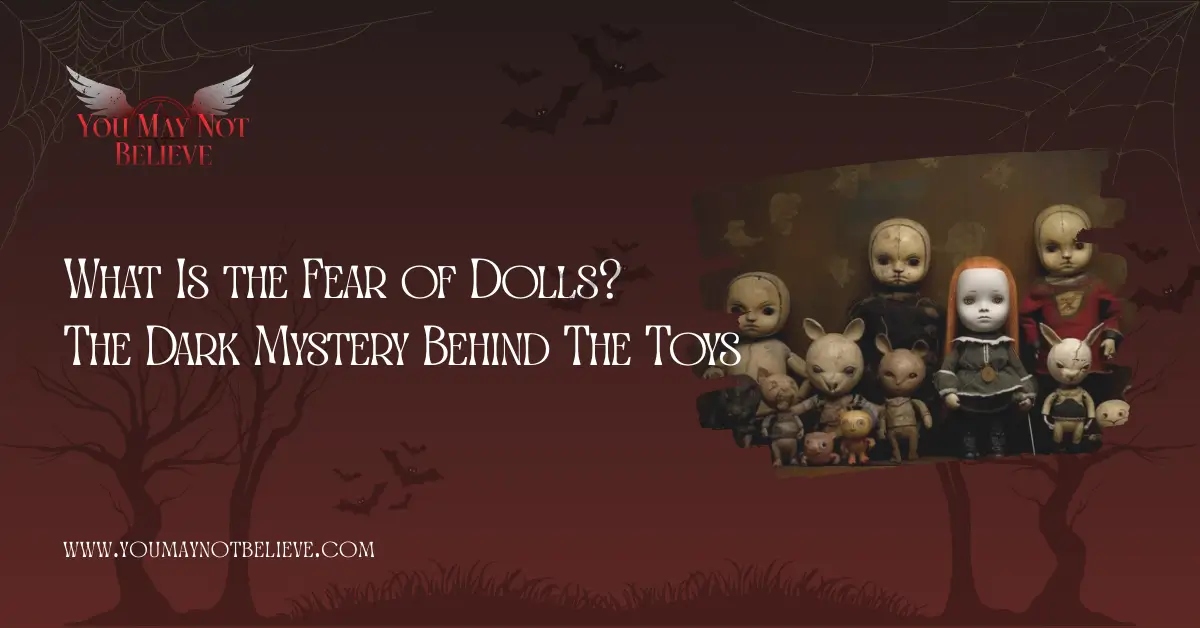
What is the fear of dolls, and why do some individuals become so anxious about these seemingly innocent objects? Dolls are merely toys or collectables for many people, but they can cause extreme dread and misery in others. This dread, known as pediophobia, is a recognised unique phobia that has a substantial impact on daily living.
When exposed to dolls, patients with pediophobia exhibit true psychological and physical symptoms, such as unnerving glass eyes, frozen expressions, and eerie immobility. Understanding this fear is the first step towards accepting its authenticity and looking into appropriate therapy alternatives.
In this complete guide, we’ll look at what pediophobia is, why it occurs, how it presents, and, most importantly, how individuals affected can find relief and regain control of their life.
Table of Contents
What is the Fear of Dolls, aka Pediophobia?
Fear of Dolls: Meaning and Definition
Pediophobia is defined as a specific phobia, which is a type of anxiety condition marked by an excessive, illogical dread of a particular object or scenario. The meaning of doll dread goes beyond simple dislike or discomfort; it is characterised by a persistent, excessive worry that is out of proportion to any genuine risk posed by the dolls.
According to mental health doctors, some phobias, such as the phobia of dolls, cause the body’s fight-or-flight reaction even when there is no actual threat. The name “pediophobia” is derived from the Greek words “paidion” (meaning kid) and “phobos” (meaning dread); it refers exclusively to the fear of dolls rather than children themselves.
This phobia can span a wide range of dolls, including porcelain dolls, baby dolls, ventriloquist dummies, mannequins, and even action figures. According to research, unique phobias affect 7–9% of the population, with pediophobia being one of the most commonly reported object-specific concerns. The level of this fear varies from person to person, ranging from minor uneasiness to full-blown panic attacks when confronted with dolls.
Is Fear of Dolls a Real Phobia?
Yes, the fear of dolls is a legitimate and accepted phobia in the mental health field. Pediophobia fits all of the diagnostic criteria for a particular phobia as defined by the Diagnostic and Statistical Manual of Mental Disorders (DSM-5). People with this illness have true anxiety symptoms that are not “in their heads” or easily controlled by willpower alone.
Specific phobias have been shown in studies to cause significant changes in brain activity, heart rate, and stress hormone levels when patients are exposed to the dreaded object. Fear affects the amygdala, the brain’s fear region, which activates the sympathetic nervous system and causes actual physical responses.
Pediophobia is taken seriously by mental health specialists since it can cause severe distress and interfere with normal functioning, especially when dolls appear suddenly in homes, stores, museums, or social settings.
Symptoms of Fear of Dolls
Emotional and Physical Symptoms of Pediophobia
- When someone with pediophobia sees dolls or anticipates seeing them, they feel a variety of uncomfortable symptoms.
- Fear of dolls symptoms usually include both mental and bodily sensations that are intense and difficult to control.
- Individuals may experience acute anxiety, fear, dread, or a sense of impending doom while approaching dolls.
- They frequently report feeling watched, uneasy, or certain that the dolls are alive or able to move.
- Physically, the body’s stress reaction activates, causing symptoms such as rapid heartbeat, perspiration, trembling or shaking, shortness of breath, chest tightness, nausea, dizziness, and chills or hot flushes.
- Some patients have a full-blown panic attack, with symptoms so severe that they believe they are having a heart attack or losing control.
- The bodily response is similar to what someone could feel when confronted with true danger, revealing how intense and instinctive these emotions are.
- In severe situations, merely seeing dolls or thinking about them might cause symptoms, making the phobia even more obsessive.
How the Fear of Dolls Affects Daily Life
The influence of pediophobia extends far beyond the meeting with a doll. Many people with this phobia develop severe avoidance tendencies, which can limit their daily activities and quality of life. They may refuse to visit friends or family members who have dolls in their houses, especially if they have children or are collectors.
Shopping might get unpleasant when you stroll past toy stores or antique stores with dolls in the displays. Museums, particularly those with historical or cultural exhibits, frequently include doll collections that patients must avoid completely.
Some people struggle with their professions if they work in retail, childcare, or entertainment settings where dolls are prevalent. Travel can also be challenging because different countries have different traditions for dolls and figurines. Friends and family members who reject the depth of the fear as stupid or childish may harm social connections.
Why are people afraid of dolls?
The Uncanny Valley Effect.
One of the most persuasive theories for why people develop a phobia of dolls is the uncanny valley, a psychological phenomenon. This concept, first introduced by Japanese robotics expert Masahiro Mori in 1970, describes the unpleasant sensation that humans have when confronted with devices that resemble almost, but not quite, human.
Dolls, especially realistic ones with lifelike features, glass eyes, and human hair, fall squarely into the uncanny valley. The human brain is extremely sensitive to detecting faces and human features, and when something appears virtually human but lacks warmth, genuine movement, or a soul behind the eyes, it causes intuitive discomfort or repulsion.
This reaction could have evolutionary roots, as our predecessors needed to swiftly discern between living humans and corpses, or between healthy individuals and those with disorders that impacted their appearance.
Modern studies on the uncanny valley have revealed that it also affects humanoid robots, computer-generated people, and mannequins. The frozen looks, unblinking glances, and unnatural immobility of dolls all contribute to a highly unnerving sense that something is inherently “wrong” with them.
Childhood Experiences, Trauma, and Learning.
Many cases of pediophobia can be traced back to specific childhood experiences that instilled long-term unfavourable associations with dolls. Children have active imaginations and may honestly believe that their toys come to life when no one is looking, especially after seeing this concept in movies and television shows.
A terrifying experience with a doll, such as being startled by one in a dark room, having a doll fall unexpectedly, or being ridiculed or intimidated by older siblings who use dolls, might result in a traumatic memory that lasts into adulthood.
Some people claim receiving dolls with particularly unnerving traits, such as cracked porcelain faces or moving eyes that appeared to follow them. Bullying with dolls, or being forced to engage with dolls despite exhibiting fear, can potentially exacerbate the phobia.
Furthermore, children develop anxieties by witnessing adults and peers; if a parent or sibling displays dread or revulsion towards dolls, a youngster may mimic that behaviour through modelling and conditioning.
Horror films, media, and cultural stories.
Numerous horror films, television shows, and stories portraying possessed, haunted, or deadly dolls have all led to public fear of dolls.
- In 1988, the Child’s Play franchise introduced Chucky, a serial killer-possessed doll, and has subsequently produced countless sequels that have horrified generations.
- The Annabelle doll from The Conjuring franchise is based on a true story explored by paranormal investigators and has become a symbol of possessed doll horror.
- Other prominent instances include the ventriloquist dummy in Dead of Night (1945), Talky Tina in The Twilight Zone, and more current films like M3GAN.
These media representations accentuate existing concerns about dolls, generating societal myths in which dolls are potential conduits for bad spirits or harmful powers. Even outside of Western culture, many tribes have folklore regarding cursed things or spirit dolls, such as Japanese yurei dolls or Haitian Vodou dolls, which add to the widespread belief that dolls have supernatural hazards.
Causes and Risk Factors of Pediophobia
Genes, Temperament, and Anxiety
According to research on anxiety disorders and phobias, genetic and biological variables play an important role in determining who develops specific fears. Twin and family studies have demonstrated that anxiety disorders, including specific phobias, run in families, implying a hereditary component.
People with a family history of anxiety disorders, panic attacks, or other phobias are more likely to acquire pediophobia. Furthermore, some temperament qualities present in early childhood, such as behavioural inhibition, high sensitivity to unfamiliar stimuli, or a generally worried disposition, enhance the risk of developing phobias.
Neurotransmitter abnormalities, particularly those involving serotonin and gamma-aminobutyric acid (GABA), can also contribute to increased fear reactions. Some people have a more reactive amygdala, the brain area that processes fear and emotional responses, which makes them more likely to acquire strong fears.
The interplay of biological predispositions and environmental triggers ultimately determines whether a person develops a full-fledged phobia. Understanding these risk variables explains why some people develop pediophobia following an unpleasant event while others do not.
Additional Phobias and Mental Health Conditions
Pediophobia is rarely seen in isolation; many people also have other connected concerns or broader mental health issues. The fear of dolls is closely related to automatonophobia (fear of humanoid figures), coulrophobia (fear of clowns), and maskaphobia (fear of masks), all of which include discomfort with human-like but not quite human objects.
Some people who suffer from pediophobia are also afraid of puppets, wax figurines, and animatronic figures for similar reasons. Furthermore, those with generalised anxiety disorder, panic disorder, or obsessive-compulsive disorder may be more likely to acquire specific phobias such as pediophobia.
Social anxiety can also be a factor, since sufferers may be concerned about being judged or ashamed if their fear is revealed or aroused in social situations. Understanding these links is critical for holistic treatment, as treating underlying anxiety problems can greatly improve outcomes for specific phobias.
Diagnosis: When Fear of Dolls Turns Into A Phobia
Signs It Could Be More Than Just Dislike
While many people are uncomfortable around dolls or simply dislike them, a true phobia goes far beyond personal preference or moderate anxiety. The main difference is in the intensity, persistence, and impact of the terror. Pediophobia is diagnosed when a fear has persisted for six months or more and produces severe distress or functional impairment in everyday life.
Warning indicators include feeling quick and strong anxiety or panic when encountering dolls, going to considerable efforts to avoid situations where dolls may be present, and discovering that the fear interferes with job, relationships, or routine activities.
If thinking about dolls causes anxiety, if you’ve had to deny invitations or change plans to avoid dolls, or if the dread seems utterly out of proportion to any actual threat, professional help may be required. Recognising that the fear is excessive or unjustified while feeling unable to control it is another sign of a diagnosable phobia.
What Happens During a Mental Health Assessment?
If you feel you have pediophobia and seek professional help, a mental health expert will do a thorough assessment to better understand your symptoms and their implications. The evaluation usually begins with a lengthy clinical interview in which the therapist questions you about the history of your fear, when it began, particular triggers, the severity of your symptoms, and how it impacts your everyday functioning.
They will look into any traumatic experiences or major incidents with dolls, your family history of anxiety or phobias, and any other mental health difficulties you may have. The clinician will utilise DSM-5 diagnostic criteria to establish whether your fear fits the requirements for a specific phobia diagnosis.
They may also use standardised questionnaires or rating scales to determine anxiety levels and the severity of the phobia. Importantly, the assessment is collaborative, with the therapist seeking to understand your specific experience and treatment goals.
Based on this thorough evaluation, they will create a treatment plan that is personalised to your specific needs, preferences, and circumstances.
Overcome Your Fear of Dolls
Evidence-Based Therapy (CBT and Exposure)
The most effective treatment for pediophobia is cognitive-behavioural therapy (CBT), especially when paired with exposure therapy. CBT assists clients in identifying and challenging the unreasonable ideas and beliefs that fuel their anxiety.
A therapist works with you to identify automatic negative thoughts that arise when you think about or encounter dolls, such as “the doll is going to hurt me” or “dolls are evil,” and replace them with more realistic, balanced thoughts, such as “dolls are inanimate objects that cannot cause harm.”
Exposure therapy, considered the gold standard for treating specific phobias, entails gradual, systematic exposure to the feared object in a controlled and safe setting. Treatment often follows a hierarchical structure, beginning with less dangerous exposures and progressing to more difficult ones.
For pediophobia, this could start with looking at cartoon drawings of dolls, then photographs, films, and finally examining real dolls from a distance before touching and handling them.
According to research, exposure therapy is extremely helpful for specific phobias, with success rates ranging from 60 to 90%.
The key is regular, prolonged exposure, which permits anxiety to naturally reduce over time as your brain learns that the feared event will not occur. Sessions are held at a pace that you can handle, so you feel supported throughout the process.
Additional Therapeutic Strategies and Medication
While CBT and exposure therapy are recommended as first-line therapies for pediophobia, other therapeutic techniques may also be effective. Acceptance and Commitment Therapy (ACT) trains people to embrace their anxiety rather than fight it, and to focus on doing things they value despite their fears.
This strategy is very beneficial for persons who are uncomfortable during exposure exercises. Psychodynamic treatment can be used to investigate unconscious conflicts or deeper psychological issues that may be underlying the phobia, especially when it is linked to childhood trauma or other significant life experiences.
Virtual reality exposure therapy is a new technique that allows people to address their fears in a simulated setting that may be less scary than real-world exposure.
While no pharmaceuticals have been explicitly licensed for the treatment of phobias, some people benefit from short-term usage of anti-anxiety medications such as benzodiazepines in acute situations or beta-blockers to manage physical symptoms during exposure exercises.
If generalised anxiety or depression are present, selective serotonin reuptake inhibitors (SSRIs) may be administered. However, medicine is often seen as an adjuvant to therapy rather than a solo treatment because it does not address the underlying fear and, if used without psychological treatment, may make long-term recovery more difficult.
Self-Help Tips for Overcoming a Doll Phobia
Gentle Self-Exposure and Desensitisation.
If you aren’t ready for formal therapy or wish to augment professional treatment, you can start working on your phobia on your own through gradual self-exposure. Begin by constructing your own fear hierarchy, which ranks doll-related situations from least to most frightening.
Begin with the simplest item, such as looking at a cartoon depiction of a doll for a few seconds. Continue with this exposure until your anxiety is reduced by at least half, which may take many minutes or even days of practice.
Once this is comfortable, progress to the next stage, perhaps by studying images of stylised or less realistic dolls. Gradually proceed through your hierarchy at your own leisure, ensuring that you have mastered each level before moving further.
Many people find it useful to begin with images of dolls that do not elicit the uncanny valley effect as strongly, such as cartoon figures or abstract representations, before progressing to realistic dolls.
From the comfort of your own home, you might watch a documentary video about doll manufacturing or collectors, or browse doll-related websites. The key is persistence and patience; even a few minutes of daily practice can result in tremendous progress over weeks and months.
Relaxation, Grounding, and Coping Skills.
When confronted with your anxieties, it is critical to understand how to control anxiety symptoms. Create a toolkit of relaxation strategies that you can employ before, during, and after exposure to doll-related stimuli.
Deep breathing techniques, such as the 4-7-8 technique (inhale for 4 counts, hold for 7, expel for 8), activate the parasympathetic nerve system, which counteracts the physical stress reaction. Progressive muscle relaxation entails gradually tensing and releasing distinct muscle groups in order to lessen physical tension.
When you’re feeling overwhelmed by worry, try the 5-4-3-2-1 method, which involves identifying five things you can see, four things you can touch, three things you can hear, two things you can smell, and one item you can taste. Journaling about your phobia can help you identify trends and make improvements.
When anxious thoughts arise, practice reframing them by asking yourself questions like “What evidence do I have that this fear is realistic?” or “What would I tell a friend who had this fear?” Developing positive self-talk and self-compassion is critical, as beating yourself up for having the phobia only adds to your anxiety.
Developing Support and Knowing When to Seek Help
Recovery from pediophobia is often facilitated by social support and connection. Consider discussing your fears with trusted friends or family members who can offer support and understanding.
Having someone beside you during exposure exercises might make the process feel more secure and controllable. Online support groups and forums for persons with certain phobias can help you connect with others who understand your situation and can provide practical guidance.
However, it is critical to realise when self-help efforts are insufficient and professional assistance is required. If your fear of dolls is interfering with your quality of life, preventing you from engaging in key activities, or causing substantial distress, you should consult a mental health specialist.
Similarly, if you’ve been working on the fear on your own for several months without seeing any progress, a therapist can provide the structure and skill you need to move forward. Don’t be afraid to get help; treating phobias is something that mental health experts perform on a daily basis, and you don’t have to suffer alone.
Frequently Asked Questions About Dollphobia
Is fear of dolls common?
While the actual prevalence rates of pediophobia are unknown, it is more widespread than many people understand. Approximately 7 to 9% of the population suffers from distinct phobias, and the fear of dolls is among the most common. According to online surveys and social media debates, many people are uncomfortable near dolls, even if they do not fulfil the clinical criteria for a phobia. The uncanny valley effect that makes dolls disturbing is practically ubiquitous, so you’re not alone if you find dolls strange or anxiety-inducing.
Can adults suddenly get pediophobia?
Yes, while specific phobias typically arise in childhood, people can develop pediophobia later in life. This could happen after a particularly terrifying experience with dolls, exposure to horror films or media that create new associations with dolls, or during times of high stress or susceptibility, when anxiety disorders are more likely to develop. Following a triggering event, a pre-existing modest uneasiness with dolls can escalate into a severe phobia. Furthermore, some adults become aware of their phobia when circumstances force them to interact with dolls more regularly, such as having children or entering a new social context.
Can fear of dolls be overcome?
While “cure” is a strong word, pediophobia is very treatable, and many people have overcome their fear via evidence-based therapy. Exposure treatment paired with CBT has a 60-90% success rate for certain phobias. Most patients who complete treatment see significant improvement in their symptoms and can handle encounters with dolls without excessive fear. Some people get entirely comfortable near dolls, while others suffer minor discomfort but little impairment in normal functioning. The key is to work with a trained therapist and adhere to the treatment process, which includes gradually building tolerance through exposure exercises.
Is fear of dolls associated with other mental health issues?
Yes, pediophobia frequently coexists with other anxiety disorders, phobias, and mental health issues. Many people who have a fear of dolls also have other anxieties, such as coulrophobia (fear of clowns), automatonophobia (fear of humanoid figures), and maskaphobia. There is also a higher risk of developing generalised anxiety disorder, panic disorder, or other specific phobias. These links exist because the fundamental mechanisms that predispose people to anxiety, such as genetics, temperament, and learnt responses, have a wide-ranging impact on mental health. Comprehensive treatment that targets larger anxiety patterns frequently results in improvement in numerous areas.
Are certain types of dolls scarier than others?
Absolutely. Most people with pediophobia find that specific types of dolls elicit more intense emotions than others. Porcelain dolls with realistic features, glass eyes, and vintage attire are especially common triggers because of their relationship with the uncanny valley and frequent inclusion in horror films. Ventriloquist dummies are frequently portrayed as particularly frightening due to their exaggerated face features and relationship with performance and deception. Baby dolls with opening-closing eyes or crying mechanisms might be upsetting since they seek to simulate natural infant activity. In contrast, many people find cartoon-style dolls, abstract figures, or blatantly toy-like dolls less intimidating since they do not strive to reproduce human features as closely.
What do I do if I come across a doll unexpectedly?
If you come upon a doll suddenly and find anxiety increasing, utilise grounding strategies to stay present and prevent panicking. Take slow, deep breaths while reminding yourself that the doll is an inanimate item that cannot harm you. If feasible, leave the environment temporarily to calm down, but attempt to return once your fear has subsided, as avoidance strengthens the phobia. Use this as an opportunity to hone your coping abilities and confront anxious thoughts. If unexpected encounters occur frequently and cause severe discomfort, it is evident that professional treatment would be valuable in assisting you to manage these situations more effectively.
Final Thoughts on Overcoming Your Fear of Dolls
Understanding and accepting the fear of dolls as a real psychiatric disorder is the critical first step towards recovery. Pediophobia, while distressing, is highly curable with the appropriate support and interventions.
Whether your fear is caused by childhood memories, cultural influences, the unpleasant character of the uncanny valley, or a mix of factors, there is effective assistance available. The path to conquering this phobia may appear overwhelming, yet thousands of people have successfully lessened their fear and regained the ability to live without continual dread about encountering dolls.
Remember that growth isn’t always linear, and even modest movements forward are significant accomplishments. If your fear of dolls is interfering with your quality of life, relationships, or everyday activities, do not hesitate to see a certified mental health expert who specialises in anxiety disorders and phobias.
With evidence-based treatment, supportive counsel, and your personal dedication to gently and compassionately confronting your concerns, you may live a life free of pediophobia.