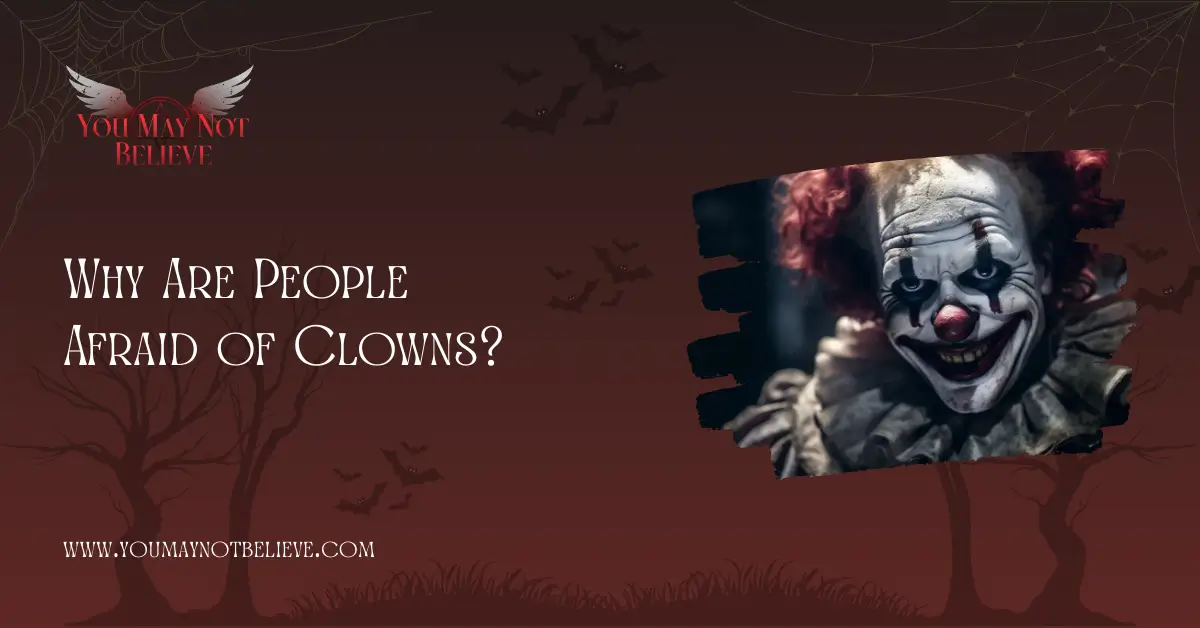
Ever wondered, “Why are clowns supposed to make us laugh… yet terrify millions?”
Why Are People Afraid of Clowns? The phobia of clowns is significantly more pervasive than many people believe. Coulrophobia affects millions of people around the world, with children cowering behind their parents at birthday celebrations and adults avoiding circus performances entirely.
But what about these painted performers elicits such strong reactions? The solution is a fascinating mix of psychology, societal upbringing, and evolutionary survival instincts.
Table of Contents
What is Coulrophobia?
Coulrophobia refers to an irrational fear of clowns. The name is derived from the Greek “kolon” (meaning limb or stilt, referring to stilt-walkers) and “phobos” (meaning terror). While many individuals are mildly uncomfortable around clowns, others with coulrophobia experience actual anxiety, panic episodes, or even complete avoidance of settings in which clowns may appear.
This phobia can emerge in a variety of ways. When presented with clowns, some people experience an increase in heart rate, perspiration, nausea, and difficulty breathing. Others may experience nightmares or intrusive thoughts about clowns. The severity varies greatly from person to person, ranging from mild anxiety to incapacitating panic that interferes with daily activities.
Why Are People Afraid of Clowns?
In brief, these are the major reasons why people are afraid of clowns.
- Unpredictability & Masked Emotions: Clowns’ makeup hides their true emotions, making them hard to read.
- “The Uncanny Valley”: Clowns look almost human but with exaggerated, unnatural features, causing discomfort.
- Cultural Depictions: Media portrays clowns as creepy or sinister (e.g., Pennywise, The Joker).
- Childhood Trauma: Bad experiences with clowns during childhood can leave lasting fear.
- Fear of the Unknown: Clowns often act unpredictably, triggering discomfort and anxiety.
The Uncanny Valley: When Humans Don’t Look Right
The “uncanny valley” effect is one of the most common psychological theories for the fear of clowns. This concept, first introduced by Japanese robotics expert Masahiro Mori in 1970, describes the uneasy sense we get when something appears almost but not quite human.
Clowns fit wonderfully in this awkward area. They have human bodies and move like people, but their faces are hidden behind thick makeup, exaggerated features, and false expressions. The painted smile does not flow seamlessly with the face beneath. The magnified eyes, inflamed nose, and dramatic colour contrasts form a mask that hinders us from detecting actual feelings.
Our brains are quite good at reading facial expressions. We learn from infancy to analyse minute changes in someone’s face to understand their intentions, feelings, and whether they pose a threat. This talent is necessary for both survival and social interaction.
When a clown’s makeup obscures these critical signs, our brain struggles to comprehend what we’re seeing. We can’t tell if the person beneath the cosmetics is truly happy, furious, or dangerous. This ambiguity causes primordial uneasiness.
According to research, disguised emotional cues are the most important component contributing to coulrophobia for many people, as they prevent them from seeing facial expressions due to makeup.
The fixed smile is especially bothersome. In nature, a smile that never changes, regardless of context, is extremely unnatural and potentially dangerous. It implies that the individual is concealing their genuine emotions, which our subconscious sees as a deceptive or harmful activity.
Threat of Unpredictability
Why are people afraid of clowns? Humans are pattern-seeking beings who value predictability. We enjoy anticipating what will happen next because it makes us feel safe and in control. Clowns are inherently unpredictable and chaotic.
Traditional clown behaviour includes abrupt movements, surprising noises, pranks, and physical humour that may appear hostile. They may blow their horns without warning, spray water on unsuspecting audience members, or invade personal space for comedic effect. What some find amusing, others see as menacing or violating.
According to research, unpredictable behaviour and uncertainty regarding harmful intent play crucial roles in the development of coulrophobia. This unpredictability is especially difficult for children to understand. Young minds are still learning about social norms and acceptable behaviour.
When a clown defies these boundaries in ways that adults find entertaining, children may perceive someone acting in a terrifying, boundary-crossing manner. The child is unable to distinguish between fun pandemonium and a serious threat.
This unpredictability can be particularly distressing for those suffering from anxiety disorders or who have been traumatised. The clown’s loss of control and inability to foresee his next move trigger the same fight-or-flight response that helped our ancestors survive true threats.
How Common is Coulrophobia?
The study of coulrophobia has produced remarkable statistics. The largest and most recent survey of 987 adult participants from 64 different nations found that 53.5% were terrified of clowns, with 5% being “extremely afraid” of them. This intense fear percentage is far greater than many other prevalent phobias.
Surprisingly, more people report extreme fear of clowns than of animals, blood or injection injuries, heights, water or weather events, restricted places, and flying. Other studies have shown varying numbers: some report that 17% of adults fear clowns, while others reported rates ranging from 1.5% to 18.6%, depending on the demographic analysed.
The prevalence of coulrophobia in children ranges from 1.1% to 6.1%, with females and preschoolers being more affected. The lower occurrence among youngsters is due to cognitive immaturity, which inhibits their ability to discriminate between fiction and reality.
According to research, women are more terrified of clowns than men, and coulrophobia decreases with age, mirroring results about other phobias such as fear of snakes and spiders.
A 2008 poll of over 250 children aged four to sixteen undertaken at the University of Sheffield revealed that the great majority found photographs of clowns extremely unpleasant. Even more telling, the children did not like clown decorations in hospitals, with some finding them downright terrifying.
Cultural Conditioning & Horror Media
While the psychological reasons for hating clowns may be universal, Western civilisation has substantially heightened this anxiety through media portrayals. Clowns’ shift from benign performers to icons of dread is a relatively recent phenomenon, fuelled primarily by popular culture.
Stephen King’s 1986 novel “It” introduces Pennywise the Dancing Clown, a shape-shifting creature who terrorises youngsters. The 1990 television adaptation, as well as the 2017 and 2019 feature versions, brought this horrific clown to life for generations.
Negative depictions of clowns in popular culture were found to be a far higher predictor of coulrophobia than personal experiences. Pennywise has become arguably the most recognisable evil clown in fiction, reinforcing the link between clowns and horror in the public imagination.
However, Pennywise was hardly the first wicked clown in popular culture. Malevolent clowns have appeared in a variety of horror films, including the 1988 film “Killer Klowns from Outer Space,” the Joker character from Batman comics, and many others. This persistent presentation has established a cultural narrative that clowns should not be trusted.
The John Wayne Gacy Effect.
The real-life case of John Wayne Gacy only fuelled these anxieties. Gacy was a serial killer who raped, tortured, and murdered at least 33 young men and boys in suburban Chicago from 1972 to 1978. He became known as the “Killer Clown” after performing as “Pogo the Clown” at children’s parties and philanthropic activities.
Twenty-six victims were buried in the crawl space of his home, three were buried elsewhere on his property, and four were dumped in the Des Plaines River. Gacy was captured on December 21, 1978, and in March 1980, he was convicted of 33 murders and sentenced to death. The stark contrast between his public reputation as a welcoming clown and his gruesome crimes established a long-standing cultural link between clowns and danger.
The media’s portrayal of Gacy, called the “Killer Clown” by the press, appeared to open the floodgates for depictions of terrifying clowns in popular culture, with clowns becoming a horror genre standard in the 1980s.
The 2016 Creepy Clown Phenomenon.
More recently, the 2016 “creepy clown” phenomenon resulted in reports of menacing clown sightings in various nations, further harming the clown’s reputation. The sightings began in South Carolina towards the end of August 2016, when youngsters reported that clowns attempted to lure them into the woods. The phenomenon spread quickly.
- According to The New York Times, the clown sightings led to at least 12 arrests across the United States, as well as one fatality in Reading, Pennsylvania, when a 16-year-old boy was tragically stabbed following an encounter that could have been sparked by a prowler wearing a clown mask.
- British law enforcement agencies warned against participating in clown-related pranks, with Thames Valley police receiving 14 claims of clown sightings in a single 24-hour period during the peak of the craze in October 2016.
- In Australia, 18 weird or threatening clown sightings were reported to Victorian police by early October, with the most serious instance involving a person wielding an axe dressed as the clown.
- Chicago Public Schools investigated over 50 social media events involving clown threats, while authorities in a dozen suburbs looked into other clown-related threats and sightings. Following reports of clown sightings, students at Penn State and Michigan State University formed mobs to seek them on campus.
- Randy Christensen, president of the World Clown Association, spoke out against the tendency of people dressing up as clowns to frighten people, affecting circuses and other clown-related enterprises.
Even McDonald’s was hit, with Ronald McDonald’s public appearances being temporarily reduced owing to the weather.
While many events were hoaxes or PR stunts, widespread media coverage caused genuine alarm and harmed the clown’s reputation. The phenomenon soon subsided, but its influence on public opinion of clowns persisted.
Childhood Development and Early Experiences
Many cases of coulrophobia start in childhood. Children’s developing brains perceive the environment in different ways than adults’, and what appears to be harmless to an adult can be quite horrifying to a child. Some kids may have a fear of dolls if not clowns.
Young children have not yet developed the cognitive capacity to properly comprehend pretend and performance. They struggle to understand that the scary-looking individual in makeup is simply an entertainer playing a part. To a three-year-old, a clown is just a strange-looking person acting strangely, which is frightening.
Clowns’ excessive facial characteristics can also be hazardous for children. Large red mouths, enormous shoes, wild hair, and oversized clothing challenge a child’s perception of what people should look like. These distortions may be viewed as hideous rather than humorous.
Personal experiences are really important. A youngster who has a terrible experience with a clown, such as one who approaches too close, is too loud, or accidentally scares them, may develop a long-term fear. If parents or carers do not assist the child understand this experience, the fear might become ingrained and last until adulthood.
The medical literature on coulrophobia in adults suggests that females account for 83.2% of responders in online support groups, with ages ranging from 19 to 65. This shows that childhood concerns frequently remain into adulthood, particularly among women.
Evolutionary Psychology Perspectives
Why are people afraid of clowns? Some academics suggest that fear of clowns may have evolutionary origins. Throughout history, anything that concealed a person’s true identity or intentions constituted a threat. Masks, face paint and costumes may represent tribal adversaries, hostile visitors, or those involved in combat or hunting.
Our predecessors who were wary of disguised persons were more likely to survive and carry along their genes. This aversion to veiled features may persist in modern psychology, induced by clown makeup that conceals a person’s genuine appearance.
Furthermore, the exaggerated features of clowns may elicit a reaction akin to our responses to sickness or ugliness. Throughout evolution, persons who avoided people with odd facial traits or skin abnormalities were less likely to develop infectious diseases. While we now know that clown makeup is not a symptom of sickness, our subconscious may still react with aversion or disgust.
The creepy factor
In a study of 1,341 individuals investigating the nature of creepiness, being a clown was voted the creepiest occupation out of 21 options. According to this study, creepiness is characterised by weird smiles, bulging eyes, very pale skin, and an odd sense of fashion.
The reasons why individuals find clowns unsettling are varied. Clowns reside in an ambiguous space, with their motives unclear. Are they pleasant entertainers or possible threats? This ambiguity keeps our threat-detection systems on alert, resulting in the unpleasant sensation we associate with creepiness.
Even Ronald McDonald, the fast food company mascot, is feared by some individuals, despite the fact that he is not intended to scare anyone, implying that there is something more fundamental about the way clowns seem that disturbs people.
Can Coulrophobia be Treated?
Coulrophobia is a clinically relevant problem since it is associated with severe comorbidity, psychological suffering, and reduced functioning. Coulrophobia, like other particular phobias, can be effectively cured.
Cognitive behavioural therapy (CBT) is frequently useful in helping people identify and overcome the irrational assumptions that underpin their anxiety. Exposure therapy, which involves gradually confronting one’s phobia in a controlled, safe atmosphere, can also help people get desensitised to clowns.
Several clinical aspects of coulrophobia, including an early start and female predominance, are comparable to those of a particular phobia, and some people with coulrophobia may be better classified as having this illness.
Understanding why many individuals are afraid of clowns can help them feel less anxious. Recognising that the fear stems from rational psychological causes rather than a personal flaw can be powerful.
Past Patterns of Clown Panics
Surprisingly, the 2016 clown sightings were not the first such occurrence. Historical records reveal that clown-related panics follow similar trends throughout decades. Reports of dangerous clowns emerged in Boston in May 1981, Kansas City in June 1981, and Pittsburgh later that summer. Chicago had clown-related events in 1991 and again in 2008. In 2013, there were clown sightings in Northampton, England, which turned out to be a marketing gimmick for a local filmmaker.
These cyclical trends indicate that clown panics could be a periodic cultural phenomenon, exacerbated by media coverage and public concern. Each new generation appears to rediscover this phobia, particularly during times of societal hardship or around Halloween.
To Wrap Up the Clown Discussion
Fear of clowns is not illogical or uncommon. It is the result of legitimate psychological phenomena such as the uncanny valley effect, our demand for predictability, evolutionary aversion to disguised faces, and significant cultural conditioning via horror media and real-world criminal instances.
With more than half of adults reporting some level of fear of clowns, coulrophobia is one of the most common specific anxieties in modern civilisation. The mix of hidden emotional signals, unexpected behaviour, and bad media depictions generates a perfect storm of psychological triggers.
Coulrophobia, whether it is caused by childhood events, popular culture, or fundamental psychological responses, is a real phenomenon that should be understood rather than dismissed.
Coulrophobia sufferers can find consolation in knowing that millions of others share their fear and that effective therapies are available. The painted smile that haunts so many dreams is, in the end, merely cosmetics on a human face, but our complicated minds sometimes struggle to remember that simple reality.
The terrible example of John Wayne Gacy and the widespread panic of 2016 show how real-world events can alter cultural beliefs. For many, what was previously considered harmless entertainment has become a source of actual distress.
Understanding the facts, statistics, and psychological mechanisms underlying this anxiety is the first step towards overcoming it or simply acknowledging that it is a frequent, valid reaction to genuinely upsetting circumstances.